

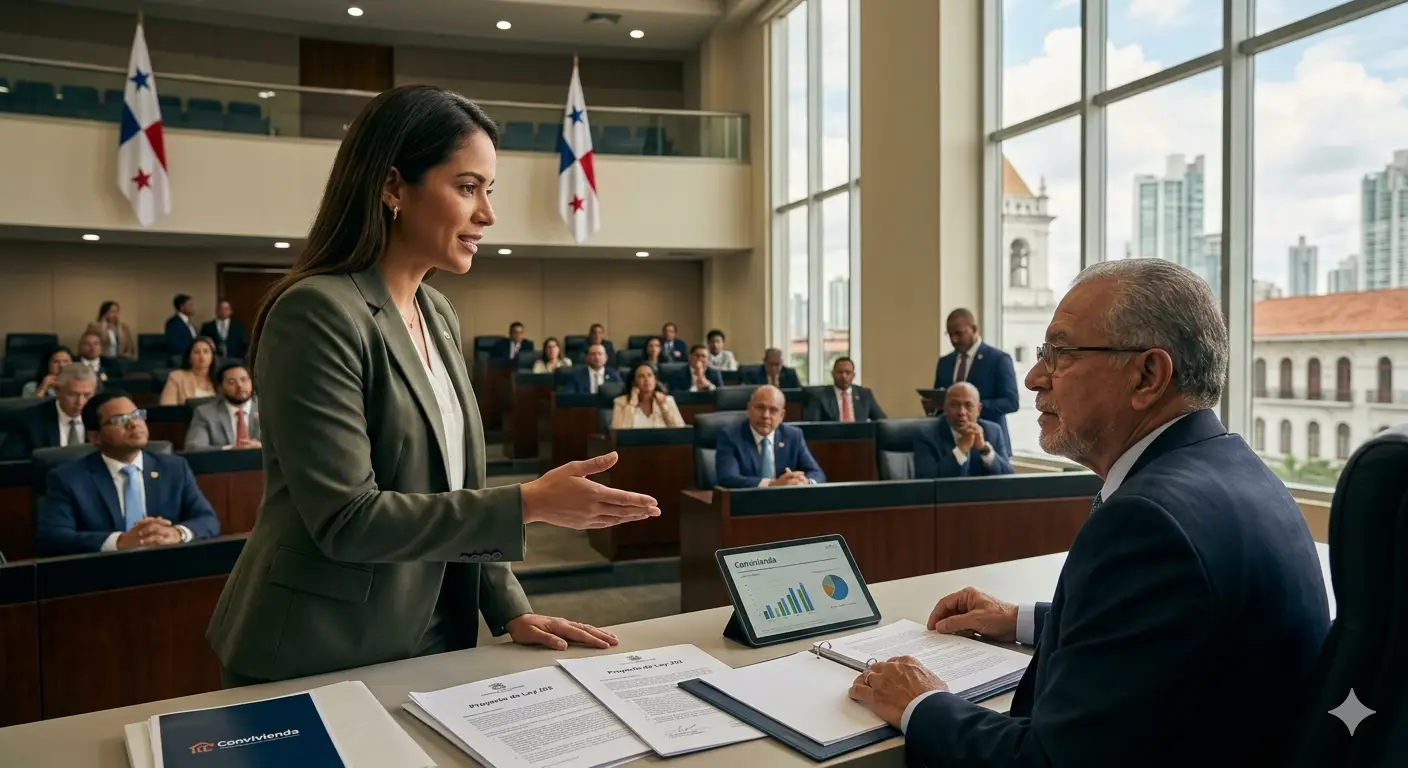
Panamá debate en la Asamblea un proyecto de ley para impulsar la compra de casas usadas: lo que necesitas saber si estás buscando vivienda hoy
La iniciativa de la Ley 252 Panamá vivienda usada está ahora en debate en la Asamblea Nacional. El mercado de vivienda en Panamá atraviesa uno de sus momentos más complejos en años, y la Asamblea Nacional lo sabe. En abril de 2026, la subcomisión de Economía y Finanzas retomó el análisis del proyecto de ley 252, una iniciativa que busca crear incentivos concretos para facilitar la compra de viviendas usadas en el país. La propuesta llega en un momento crítico: las ventas de vivienda llevan dos años en caída y el déficit habitacional supera las 180,000 unidades en todo el territorio nacional.
Desde Top Investments Panama, empresa inmobiliaria especializada en el interior del país, queremos explicar de qué trata esta iniciativa, qué revelan los datos actuales del mercado y qué significa todo esto para quien está buscando una propiedad hoy.
¿Qué propone el proyecto de ley 252?
La iniciativa, impulsada por la diputada Yamireliz Chong y en análisis en la subcomisión de Economía y Finanzas de la Asamblea Nacional, plantea extender el esquema de interés preferencial a la compra de viviendas usadas algo que actualmente solo aplica para inmuebles nuevos.
Según el análisis legislativo publicado por Infobae Panamá, los puntos clave de la propuesta incluyen:
- Mecanismos fiscales y financieros orientados a facilitar el acceso a propiedades de segunda mano.
- Un esquema de interés preferencial en préstamos hipotecarios para vivienda usada, con un límite de hasta $300,000 y un plazo máximo de 10 años.
- Requisitos de acceso: que el comprador adquiera su primera vivienda y que no haya sido beneficiario previo del interés preferencial.
- Participación del Ministerio de Vivienda, el Ministerio de Economía y Finanzas y gremios del sector privado en la definición de los criterios técnicos.
El proyecto también señala que el mercado de vivienda usada puede contribuir a reactivar la actividad inmobiliaria en zonas con infraestructura disponible pero baja rotación de inmuebles. La subcomisión continuó las sesiones en abril con más actores del sector público y privado antes de avanzar a etapas superiores del proceso legislativo.
"Este segmento podría contribuir a reactivar la actividad inmobiliaria en zonas urbanas consolidadas, donde existe infraestructura disponible pero baja rotación de inmuebles." — Infobae Panamá, análisis proyecto de ley 252, abril 2026
El contexto que hace urgente esta propuesta: los datos de abril 2026
El proyecto de ley llega en un momento en que los números del sector no dan espera. Según el informe publicado por Republica.com el 21 de abril de 2026, con datos del Consejo Nacional de Promotores de Vivienda (Convivienda):
- Las ventas de vivienda en Panamá acumulan una caída del 55% en los últimos dos años.
- Solo en 2025 se vendieron 4,020 viviendas, una caída interanual del 34.38%.
- El déficit habitacional supera las 180,000 unidades en todo el país.
- En los últimos cinco años el sector perdió aproximadamente 40,000 empleos directos.
Elisa Suárez, directora ejecutiva de Convivienda, fue directa en su diagnóstico:
"El problema de fondo no es la falta de demanda, sino la falta de condiciones para comprar."
El inventario disponible al cierre de 2025 revela además dónde está concentrada la oferta: la ciudad de Panamá concentraba 1,279 unidades y Panamá Oeste 1,237. El interior del país, en contraste, tiene muy poca oferta de vivienda nueva. Coclé, por ejemplo, cerraba 2025 con apenas 20 unidades disponibles en el inventario formal.
¿Qué significa esto para quien busca casa en el interior de Panamá?
El dato de Coclé con solo 20 unidades en inventario de vivienda nueva es revelador: en el interior del país la oferta formal de vivienda nueva es muy limitada. Eso hace que la vivienda usada sea, en la práctica, la principal opción real para miles de familias que buscan una casa en provincias como Coclé, Herrera, Los Santos y Veraguas.
Si el proyecto de ley 252 avanza en la Asamblea, el mercado de vivienda usada podría recibir un incentivo financiero histórico que lo haría aún más accesible. Pero incluso sin esa ley, hoy mismo las casas usadas en el interior ofrecen ventajas reales frente a la vivienda nueva:
- Precios más accesibles sin el sobrecosto del promotor ni los nuevos costos fiscales que aplican a la primera venta de vivienda nueva.
- Mayor disponibilidad: mientras el inventario de vivienda nueva en el interior es escaso, las propiedades usadas tienen mayor rotación.
- Ubicaciones consolidadas: casas en barrios establecidos, con servicios disponibles, vecindad conocida y sin tiempos de espera de obra.
- Negociación directa: el mercado de segunda mano permite mayor flexibilidad en precio y condiciones entre vendedor y comprador.
Nuestro rol como empresa inmobiliaria en este contexto
En Top Investments Panama seguimos de cerca estos debates legislativos y las tendencias del mercado porque impactan directamente a los clientes que acompañamos: familias que buscan su primera vivienda, inversionistas que quieren posicionarse en el interior y personas que tienen una propiedad y necesitan venderla bien.
Si el proyecto de ley 252 avanza, quienes ya tengan una propiedad usada en el interior podrían beneficiarse de un mercado más activo y con mayor acceso a financiamiento por parte de los compradores. Y quienes estén buscando comprar hoy tienen la oportunidad de hacerlo antes de que ese dinamismo se traduzca en precios más altos.
Como asesores de inversión inmobiliaria con operación en el interior del país, nuestro trabajo es ayudarte a entender ese contexto y tomar decisiones informadas, en el momento correcto.
¿Tienes una casa en el interior que quieres vender? ¿O buscas una propiedad a buen precio antes de que el mercado cambie? Contáctanos hoy.
